
Pro Drummer Tips/
How Drummers Actually Make Money (From a Guy Who's Tried Most of It)
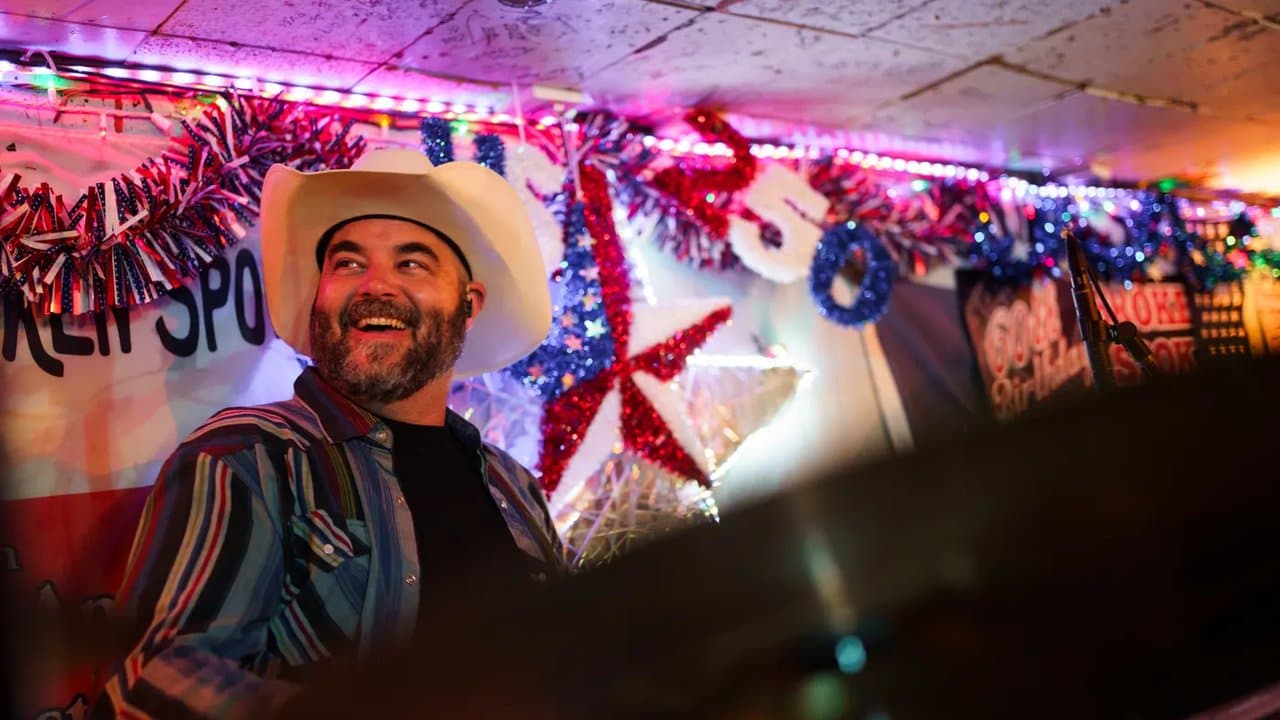
In college I played drums on somewhere around a hundred songs at a recording studio in Abilene. The engineer would save up about 10 songs from different clients, then call me in after hours. I'd show up around 10pm and we'd track drums until 2 in the morning. I got paid anywhere from $50 to $100 a song.
At the time I thought that was amazing, and honestly, it was. Getting paid anything to play drums felt special. It meant somebody thought my playing was worth money.
Years later I've played bars, done studio work, put drum content online, and ended up managing a band and booking gigs. So when people ask how musicians actually make money, I don't have one answer. There are several, and they pay very differently. Here's how each one really works.
1. Playing Live: Real Money, But You're Trading Time for It
This is the path most of us start on, and it's the one that keeps you humble.
A typical bar or club gig pays somewhere around $100–150 per musician for a 3–4 hour show. That sounds fine until you add up the whole night: loading in, setting up, soundcheck, waiting around, three or four sets, tearing down, loading out, and driving home. That "4-hour gig" is really 7 or 8 hours of your night. Do the math and you're often close to minimum wage.
And it hasn't gotten better. In Austin, the "Live Music Capital of the World," KUT reported that musician pay for club gigs averaged about $100 per musician per gig 40 years ago, and it's still about $100 today. The Austin Music Census found almost 70% of local musicians made less than $10,000 a year from music.
You may have heard Austin has an official musician rate. It does, but it doesn't cover what most people think. In 2022 the city's Music Commission raised its performance rate from $150 to $200 per musician, and City Council made it official in 2023. It only applies to shows the city pays for, or venues using city Live Music Fund grants. Your regular Saturday night club gig isn't covered.
When you're young and trying to "make it," $200 a night sounds like a lot. It's a fair rate. Most gigs just don't pay it.
That's the rate a lot of bands play for, and plenty never get past it. But it isn't fixed. Once your band starts commanding attention and building a following, you have leverage to negotiate. A venue that knows you'll pack the room will pay for it, either with a bigger guarantee (a set fee no matter how many people show up) or a door split, where the band takes a share of the ticket sales or cover charge. The more tickets you sell, the more a door split pays, and the more a venue will offer to make sure you play there instead of down the street. For most bands, the biggest raise doesn't come from asking for more money. It comes from bringing more people.
Where live money gets better: private events. Weddings, corporate parties and private events routinely pay three to five times what bars pay, often $300–500+ per musician. The host is paying for a night they'll remember, not filling a slot on a Thursday. Plenty of working bands play bars because they love it and play weddings to pay the bills.
2. Studio Work: Hard to Get Into, Better Than You'd Think
Back to those 2am sessions in Abilene.
The musicians' union (the AFM) sets a scale of about $488 per musician for a standard 3-hour recording session. For lower-budget albums there's a reduced rate of about $274 for 3 hours. Most small studios aren't union, but those numbers give you a benchmark.
At $50–100 a song, a night of 5–10 songs paid anywhere from $250 to $1,000 for about four hours of work. That's right in line with the low-budget union rate, and sometimes well above it, for a college kid with no résumé. I wasn't getting ripped off. I was getting paid like a working session player.
The catch was how often it happened: maybe once a month. Great money per hour doesn't add up to a living when the hours only come around 12 times a year. That's the reality of studio work for most drummers. The rate can be good, but the work comes when it comes, and you don't control the calendar.
Today a lot of studio drumming has moved online. Remote session drummers record in their own studios and send the tracks over. Newer players typically charge $50–150 a song, and established ones get $150–500+. Platforms like AirGigs and SoundBetter connect drummers with artists all over the world, so you're not limited to whatever studio is in your town.
The job hasn't changed. You need to be fast, consistent and easy to work with, and you need someone to give you a first shot. Studio work rewards drummers who nail it in one or two takes, not the flashiest player in the room.
3. Teaching: From Weekly Students to a Real Business
A roster of weekly students means predictable money every month, which gigs and sessions never give you. Plenty of great drummers have kept their playing careers alive because Tuesday and Thursday afternoons were booked with lessons.
The limit is the same as gigging: you get paid by the hour, and there are only so many hours in a week. Once your schedule is full, the only way to earn more from one-on-one lessons is to raise your rate.
The way around it is to stop selling your hours and start selling what you know. Gabe Helguera is the best example I know of. Gabe founded Drum Beats Online, an online drum lesson platform, and since 2017 he's also been the drummer for I Prevail, a two-time Grammy-nominated band. His YouTube channel is one of the biggest drum lesson channels on the platform. Those free videos bring drummers in, and a paid membership gives them a full library of lessons, a structured learning path based on their skill level, downloadable notation, and live sessions.
Here's a typical example. It's a genuinely useful free lesson, and the kind of video that sends drummers to his membership:

That's the model to learn from. A private lesson pays you once, for one student, for one hour. A recorded lesson can be sold to thousands of students for years, including while you're on tour playing arenas. Gabe built a teaching business that doesn't depend on him being in the room, and it doesn't stop when he's on the road.
You don't need a Grammy-nominated band to do a smaller version. Record the things you teach over and over. Turn them into practice packs, play-along tracks, PDFs or a short course. Then let YouTube or social media bring students to them.
4. Social Media: The Lottery Ticket (With Better Odds Than You Think)
Everybody's seen a drummer blow up online and wondered if they could do it too. Here's the reality.
YouTube doesn't pay anything until you hit 1,000 subscribers and 4,000 hours of watch time. After that, ad revenue for a lot of music channels starts around $1 per 1,000 views. A video with 10,000 views might earn you about ten bucks.
I can tell you from experience. At the peak of my drum channel's views, I might have made $1,000 from YouTube in a year. That's not nothing, but it's not quitting-your-day-job money either.
And it doesn't change as much as you'd think when you get huge. Look at El Estepario Siberiano. Jorge Garrido is a drummer from Valencia, Spain, who started posting drum covers seriously around 2019. Within a couple of years he was one of the most famous drummers on the internet, with millions of followers and over a billion views on YouTube alone. If you haven't seen him play, start here:
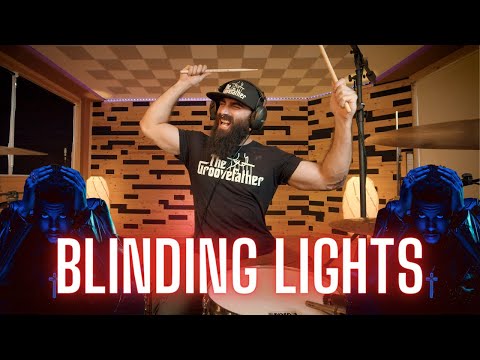
In 2025 he told MusicRadar what all those views actually paid. His channel had generated about $4.27 million in YouTube revenue. Because his videos are covers of other people's songs, copyright claims send most of that money to the rights holders. After that, and after taxes in Spain, he was keeping about $29,400 a year from YouTube. From TikTok and Instagram, with hundreds of millions of views between them, he'd made nothing. His summary: "I make a living selling hats and shirts."
That's one of the most-watched drummers alive making less from views than a lot of people make at an entry-level job. Notice where the money went, too: to the people who wrote the songs. (More on that in the next section.)
So ad money isn't where drummers get paid online. The money comes from what a following lets you do, and El Estepario is a good example of that too:
- Sponsorships and endorsements. Gear companies want to be in front of drummers who watch drum videos. At first that might just mean free sticks and cymbals. With a big enough audience, it turns into real deals. El Estepario has partnered with Pearl, Roland, Meinl, Evans and Drumeo, plus non-music brands like Monster Energy and Vans.
- Merch. Hats and shirts, in his case, and it pays better than the views.
- Gigs that come from the following. His online audience led to live work, including playing in the Spanish metal band Saratoga and touring with Puerto Rican rapper Residente.
- Patreon, memberships and live streams. A few hundred fans paying a few dollars a month is steadier income than most gigs.
- Lessons, courses and downloads. Your audience is your customer list. That's exactly how Gabe Helguera's channel feeds his lesson business.
- Affiliate links. Recommend the gear you actually use and earn a cut when people buy it.
You don't need to go viral. You need a few thousand people who really care what you do. That takes posting consistently for a long time, which is where most people quit. And if you do go viral, the views still won't pay you. What you build on top of them will.
5. Writing and Sync Licensing: Where the Real Money Hides
If there's one path that can genuinely change your life as a musician, this is it.
"Sync" is when your song gets licensed for a TV show, movie, ad or video game. For independent artists, a TV placement typically pays somewhere between $500 and $15,000, and a network TV series can go much higher. That's just the upfront fee. Every time the show airs, here and overseas, you earn performance royalties through your PRO (ASCAP or BMI). Over the life of a show, those royalties can end up worth more than the original fee.
Here's the uncomfortable truth for drummers: sync money goes to whoever wrote the song. Playing on a track doesn't get you a writing credit, no matter how good the drum part is.
Some bands deal with this early in their career and agree to split everything. Every song gets divided evenly between the members, no matter who brought in the lyric or the melody. R.E.M. and U2 both famously credited their songs to the whole band, which also takes one of the biggest fights a band can have off the table.
That's the exception, though. It's much more common for the writing credit to follow the lyrics and the melody, because that's what counts as the song. The drum part and the bass line usually get treated as the arrangement. The people who played them get paid once, and the people who wrote the words and melody get paid every time the song is played.
I wish someone had sat me down and explained this early on. Among my songwriter friends, there's a saying: "Say a word, get a third." It's tongue-in-cheek, but it rings true. If you're in the room when a song gets written and you contribute something, a lyric, a hook, a groove that defines the song, you should be talking about a writing split. Most of the time the song goes nowhere and it doesn't matter. But if it turns into a hit, or ends up on a TV show, that credit is the difference between a one-time session fee and getting paid for the rest of your life.
So write, co-write, and speak up about credit before the song is finished, not after it's successful.
6. Managing or Booking a Band: Getting Paid From the Band, Not Just in It
This is the path I didn't see coming.
A band manager typically earns 15–20% of the band's gross income. (Gross means the cut comes off the top, before expenses.) A lot of new deals start at 20% and step down toward 15% over a few years. Booking works much the same way: you find the gig, and you take a percentage.
The appeal is simple. As a player, you get paid for your own hours. As a manager or booker, you get a cut of everything the band earns, including nights when you aren't on stage. A good manager with a good band that's going places can make more than any member of the band.
It's real work, though. You're advancing shows: confirming load-in times, stage plots, sound, parking, set lengths and who's getting paid what. You're on Zoom calls with wedding planners who want every detail of their client's big day to be perfect, down to the first-dance song and exactly when the band takes a break. You're answering the phone, chasing deposits, dealing with venues, keeping everyone in the band happy and making sure they all show up on time. When something goes wrong at a gig, it's your phone that rings.
Your income only grows if the band does, so you need to believe in the band you're working for.
The Big Picture: Labor vs. Ownership
Step back and look at all six, and there's a clear dividing line.
Gigs, sessions and one-on-one lessons are labor. You show up, you play, you get paid once. When you stop working, the money stops.
Writing, content, online courses and management are ownership. You build something once, whether it's a song, a lesson library or a band's career, and it keeps paying after the work is done.
Most working drummers I know aren't doing just one of these. They gig on weekends, teach during the week, take remote sessions when they come in, and build something on the side that might pay off down the road. The labor pays this month's bills. The ownership is what eventually lets you stop trading every hour for money.
Heads up: the book link below is an Amazon affiliate link. If you buy through it, I earn a small commission at no extra cost to you. Full FTC disclosure here.
My honest advice for young musicians trying to make a living playing music:
- Get really good at your craft. Everything else on this list depends on it. Being good is what gets you the gig, the session, the students and the following.
- Learn the music business. Know what a guarantee and a door split are, what a fair session rate is, how writing credits and royalties work, and what a manager should take. Nobody's going to look out for that for you. If you read one book on it, make it Donald Passman's All You Need to Know About the Music Business.
- Diversify your music income. Gig, record, teach, create, write, manage. Just "playing drums" usually doesn't add up to a comfortable living. Several of these together can.
Frequently asked questions
How much do drummers get paid for a bar gig?
Most bar and club gigs pay around $100 to $150 per musician for a 3 to 4 hour show. Once you count load-in, soundcheck, teardown and the drive, that often works out close to minimum wage.
What is the Austin musician pay rate?
The City of Austin pays at least $200 per musician for city-funded performances, for groups of up to six. It only applies to shows the city pays for or venues using Live Music Fund grants, not regular club gigs.
How much do session drummers make per song?
Union scale is about $488 per musician for a 3-hour session. Remote session drummers typically charge $50 to $150 a song when starting out and $150 to $500 or more once established.
Can drummers make money on YouTube?
Ad revenue alone pays very little, often around $1 per 1,000 views. Even El Estepario Siberiano says he lives on merch and brand deals rather than views. The money comes from sponsorships, merch, lessons and memberships.
What percentage does a band manager take?
A band manager typically takes 15 to 20 percent of the band's gross income. Many new deals start at 20 percent and step down toward 15 percent over a few years.
Your turn: how are you making money from drumming?
Gigs, sessions, students, YouTube, songwriting, a band you manage, or something I haven't thought of? Leave a comment and tell me what's working for you, and what isn't.
And if I left something out that belongs on this list, let me know.
Leave a comment
Join the discussion
Leave a comment
Your email is never published. Comments are reviewed before they appear.